
Catch Suspicious Skin Changes Early and Treat Them With Care
Researchers estimate that one in five Americans will develop skin cancer in their lifetime. It is common, but without prompt diagnosis and treatment it can lead to serious health problems. At Hauw Han, MD in West Chester, OH , board-certified plastic and reconstructive surgeon Hauw T Han, MD, treats skin cancer in people of all ages and ethnicities. If you are concerned about a mole, spot, or growth, book online or call (513) 755-8115.
Request an AppointmentWhat Is Skin Cancer?
Skin cancer is a group of diseases in which skin cells divide and multiply uncontrollably. It most often appears on areas that are regularly exposed to sunlight, but it can develop anywhere on the body.
There are three main categories: basal cell carcinoma, squamous cell carcinoma, and melanoma. If you notice an unusual mole or growth, contact Dr. Han right away. You can learn more about his background and training on the About page.
What Are the Symptoms of Skin Cancer?
Symptoms vary from person to person and depend on the type of skin cancer.
Basal Cell Carcinoma
Basal cell carcinoma typically forms on the neck or face. It usually appears as:
- A pearly or waxy bump
- A flat, flesh-colored scar or lesion
- A bleeding, scabby sore that heals and then returns
Squamous Cell Carcinoma
Squamous cell carcinoma typically forms on the hands, ears, or face. It usually appears as a firm, red nodule or a flat lesion with a scaly, crust-like surface.
Melanoma
Melanoma can form anywhere on the body. In men it is especially common on the face, chest, or back, and in women it tends to develop on the lower legs. Signs of melanoma include:
- A large brown spot
- A painful lesion that itches or burns
- A mole that changes in color or size
Who Is at Risk of Developing Skin Cancer?
You are more likely to develop skin cancer if you:
- Live in a high-altitude climate
- Have many moles
- Have precancerous skin lesions
- Have a family history of skin cancer
- Have a weakened immune system
Exposure to radiation or toxic substances such as arsenic can also raise your risk.
How Is Skin Cancer Diagnosed?
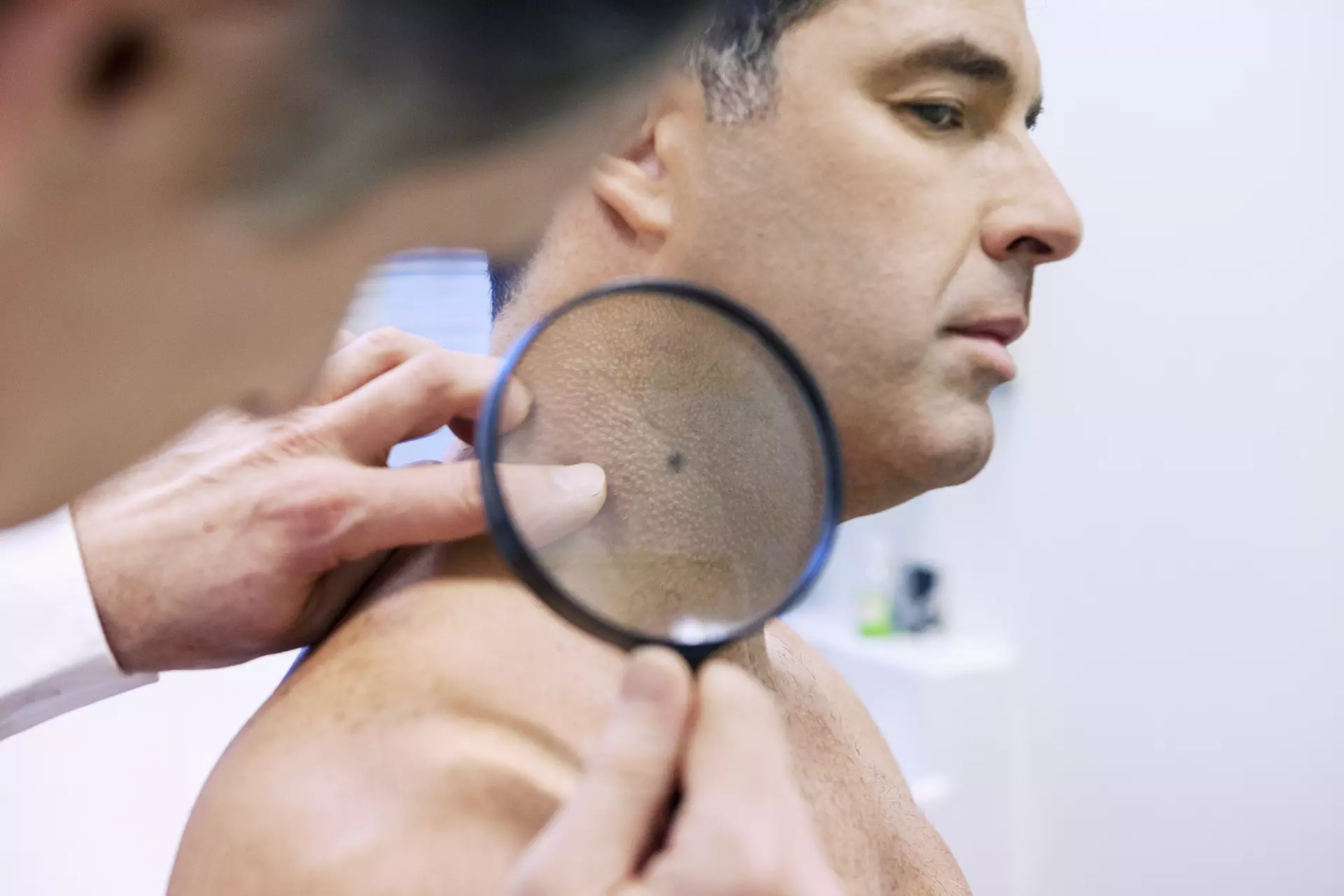
Dr. Han begins with a physical exam of your skin and a review of your health history. He will ask about your symptoms and lifestyle, including whether you wear sunscreen, whether you smoke, and when you first noticed the growth or lesion.
If one or more lesions look potentially cancerous, he performs a biopsy. He carefully removes a small piece of skin and sends it to a laboratory, where it is analyzed for cancerous or precancerous cells.
How Is Skin Cancer Treated?
Treatment depends on the type, location, and severity of the cancer. After a comprehensive consultation, Dr. Han might recommend:
- Freezing the cancer
- Excisional surgery
- Mohs surgery
- Curettage and electrodesiccation
- Photodynamic therapy
Some patients may also benefit from radiation or chemotherapy.
If your skin cancer spreads and requires surgical removal, Dr. Han can develop a cosmetic treatment plan that replaces your skin and restores it to a healthy, vibrant condition. To receive treatment for skin cancer, request a consultation at Hauw Han, MD or call (513) 755-8115.
Skin Cancer Questions Answered
What are the main types of skin cancer?
The three main types are basal cell carcinoma, squamous cell carcinoma, and melanoma. Each looks different and tends to appear in different areas of the body, so any new or changing spot is worth having examined.
What skin changes should I have checked?
See Dr. Han if you notice a pearly or waxy bump, a flat flesh-colored scar-like lesion, a sore that bleeds or scabs and keeps returning, a firm red nodule, or a scaly crusted patch. A mole that changes in color or size, or a lesion that itches, burns, or hurts, should also be checked promptly.
Who is more likely to develop skin cancer?
Risk is higher if you live at high altitude, have many moles or precancerous lesions, have a family history of skin cancer, or have a weakened immune system. Exposure to radiation or toxic substances like arsenic also increases risk.
How does Dr. Han diagnose skin cancer?
He examines your skin, reviews your health history, and asks about your symptoms and lifestyle. If a lesion looks potentially cancerous, he takes a small skin sample (a biopsy) and sends it to a laboratory to be analyzed for cancerous or precancerous cells.
What treatment options are available?
Depending on the type, location, and severity, options may include freezing, excisional surgery, Mohs surgery, curettage and electrodesiccation, or photodynamic therapy. Radiation or chemotherapy may also be appropriate for some patients. Dr. Han explains the recommended approach after your consultation.
Can my skin be restored after cancer removal?
Yes. If your skin cancer spreads and requires surgical removal, Dr. Han can develop a cosmetic treatment plan that replaces your skin and restores it to a healthy, vibrant condition. As a plastic and reconstructive surgeon, he plans treatment with both your health and your appearance in mind.
How do I schedule a skin cancer consultation?
You can book online with the scheduling tool or call the West Chester office at (513) 755-8115. For other common questions about the practice, visit our frequently asked questions page.
Have a Spot You Want Looked At?
Don’t wait on a mole or growth that concerns you. Schedule a consultation with Dr. Han at Hauw Han, MD in West Chester, OH , or call (513) 755-8115 to get started.